
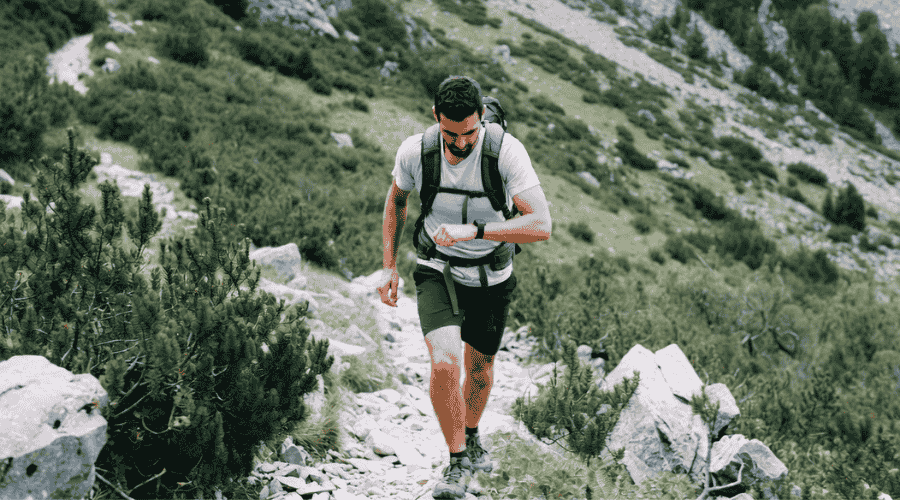
There’s something incredibly satisfying about watching your step count climb as you ascend a mountain trail. Trekking is not just about reaching the summit — it’s about every step you take along the way. On my recent high-altitude adventure, I decided to count steps using HumeHealth Band while trekking, and the results were surprisingly motivating.
If you love combining fitness metrics with outdoor exploration, this wearable might just become your new trail companion.
Why Counting Steps Matters During Trekking
Trekking isn’t your average walk in the park. It’s a dynamic activity involving elevation gain, varied terrain, and long endurance stretches. Counting steps during a trek helps you:
-
Measure total physical output
-
Track endurance improvement
-
Set distance-based goals
-
Monitor calorie burn
-
Stay motivated during long ascents
Unlike casual walking, trekking steps vary in intensity — steep climbs, rocky trails, and uneven ground all demand more effort per step. That’s why accurate tracking matters.

What Is the HumeHealth Band?
The HumeHealth Band is a wearable fitness tracker designed to monitor activity metrics such as:
-
Step count
-
Heart rate
-
Calories burned
-
Sleep patterns
-
Activity duration
What impressed me most was its lightweight design — perfect for long treks where every ounce matters.
My Trekking Experience Using the HumeHealth Band
Day 1: Trail Warm-Up (Moderate Terrain)
The first day involved forest trails with gradual elevation. I synced the band before starting and activated activity tracking mode.
Results:
-
18,462 steps
-
12.4 km distance
-
Moderate heart rate spikes during uphill stretches
The step counter felt responsive, even when I slowed down to navigate rocky paths.
Day 2: Steep Ascent Challenge
This was the real test. Sharp inclines, loose gravel, and frequent rest stops.
I wanted to accurately count steps using HumeHealth Band while trekking on steep terrain — where many trackers miscalculate due to arm movement variation.
Results:
-
24,973 steps
-
1,150 meters elevation gain
-
Noticeable calorie burn increase
The band maintained consistency even when I used trekking poles. That’s a major plus since arm-assisted hiking can throw off basic pedometers.
How Accurate Is It on Uneven Terrain?
Accuracy is critical when you’re relying on metrics for performance tracking.
Here’s what I observed:
-
Minimal step loss during slow climbs
-
No exaggerated counts during downhill movement
-
Stable tracking despite intermittent pauses
Wearables rely on accelerometers and motion sensors. The HumeHealth Band seems well-calibrated for varied trekking motion patterns.
Benefits of Counting Steps While Trekking
1. Psychological Motivation
Seeing your step count increase in real time adds a subtle gamification layer to trekking. It pushes you to:
-
Complete “one more thousand”
-
Reach a round-number milestone
-
Beat yesterday’s total
2. Performance Benchmarking
By consistently using the band across multiple treks, you can compare:
-
Average steps per kilometer
-
Steps taken per elevation gain
-
Time-to-step ratio
This helps identify efficiency improvements over time.
3. Health Monitoring in Remote Areas
When trekking in isolated regions, keeping an eye on heart rate and exertion levels is essential. The band provides a quick pulse check without stopping to manually measure vitals.
Tips to Count Steps Using HumeHealth Band While Trekking More Accurately
To maximize precision:
-
Wear it snugly above the wrist bone
-
Start tracking mode before beginning your trek
-
Avoid loose swinging when standing still
-
Sync data post-trek to analyze patterns
If you’re using trekking poles, keep movements natural — don’t overcompensate arm motion.
Comparing It to Smartphone Step Tracking
Many hikers rely on phone apps. However:
| Feature | HumeHealth Band | Smartphone |
|---|---|---|
| Battery Life | Longer | Drains quickly |
| Portability | Always on wrist | Stored in backpack |
| Accuracy During Climb | More stable | Can miss steps |
| Heart Rate Monitoring | Yes | Usually No |
On long trails, conserving phone battery for navigation and emergencies is critical. A wrist wearable is more practical.
Is It Worth Using for Serious Trekkers?
If you trek occasionally, step counting is a fun bonus. But for regular hikers or mountain enthusiasts, tracking data helps optimize training and endurance.
The ability to count steps using HumeHealth Band while trekking turns your hike into measurable progress.
You’re not just exploring mountains — you’re quantifying resilience.
Final Thoughts: Steps That Tell a Story
On my last summit day, I crossed 30,000 steps before sunset. Watching that number tick upward during the final climb was strangely emotional. Every step represented effort, persistence, and progress.
Trekking is about moments — misty sunrises, pine-scented trails, distant peaks. But data adds a second layer to the experience. It transforms memory into metrics.
If you enjoy blending adventure with analytics, the HumeHealth Band is a solid trail companion. Because sometimes, counting steps isn’t just about fitness — it’s about measuring how far you’ve come.